
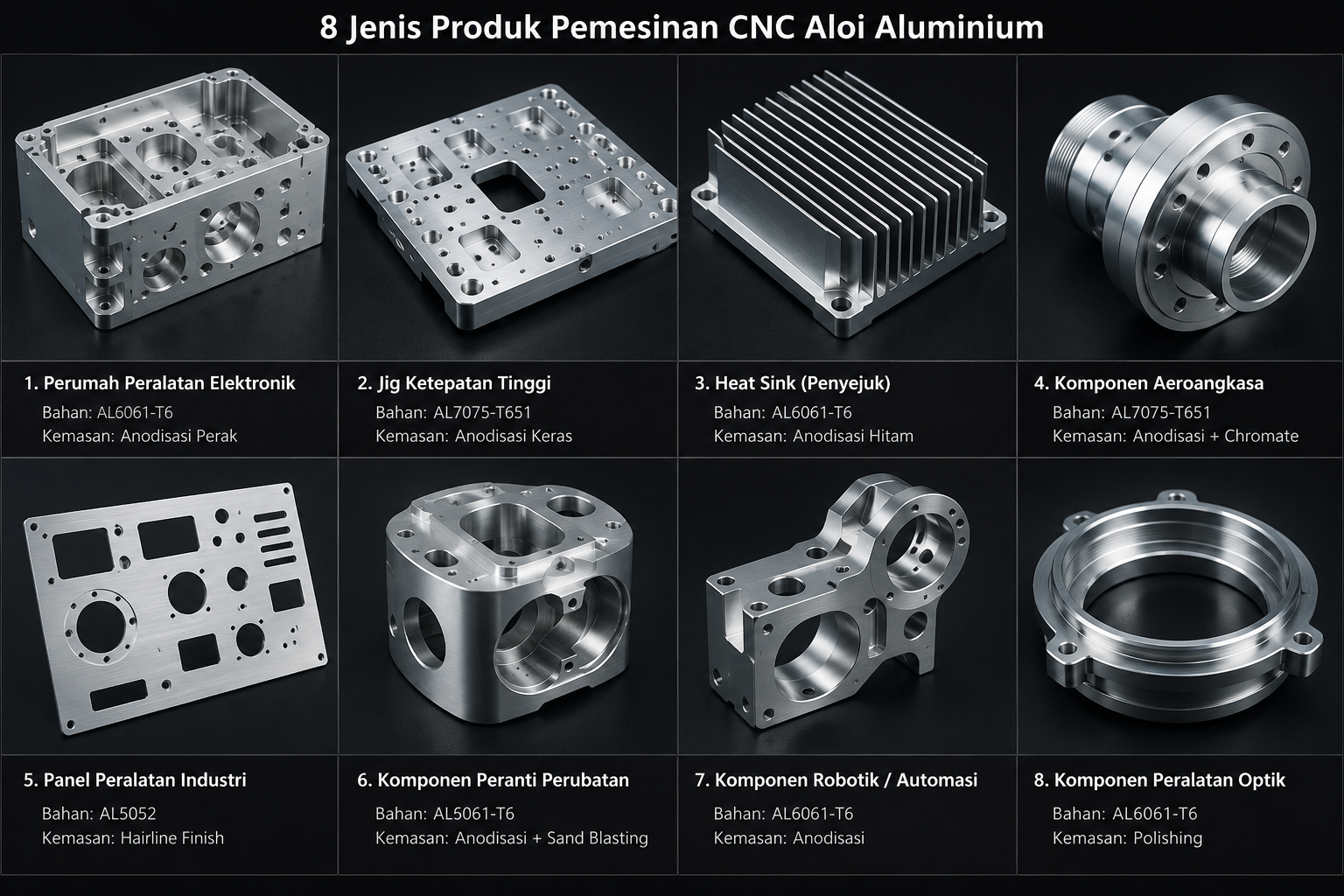
CNC machining of aluminum alloys is a modern manufacturing process that utilizes computer numerical control machine tools (such as milling machines and lathes) to perform precision cutting, drilling, and forming of aluminum alloy materials. – The most common aluminum alloys are 6061, 7075, 5052, and 2024.
Usinage CNC de précision de l’aluminium
Precision Aluminum CNC Machining
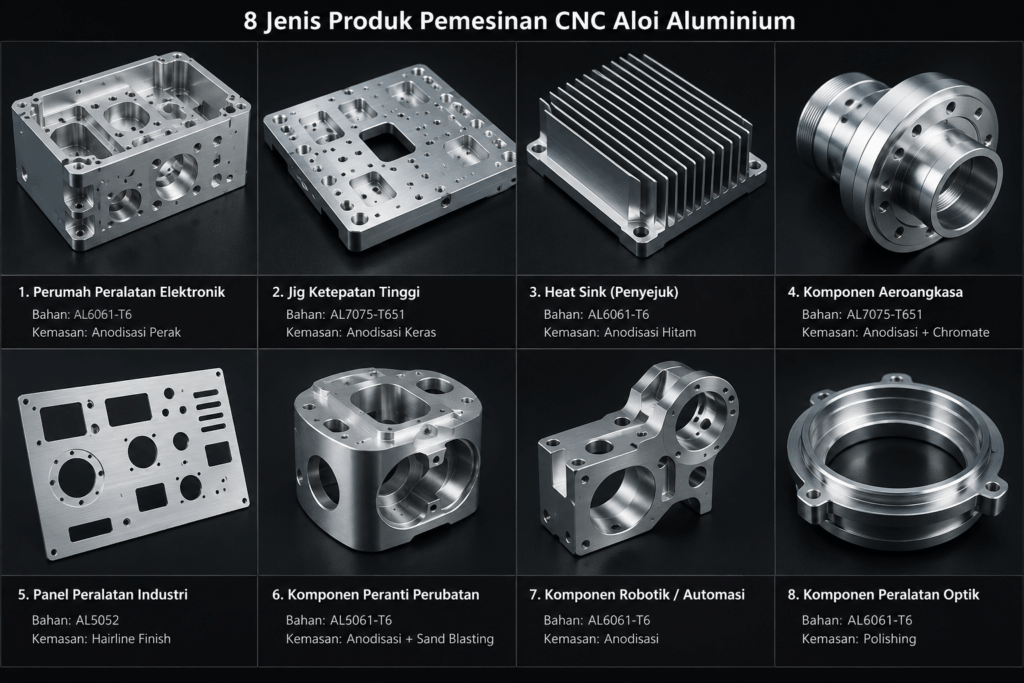
Aluminum CNC machining is a precision manufacturing process that utilizes advanced CNC Machining Centers, CNC Turning Centers, and multi-axis machining systems to perform operations such as milling, turning, drilling, tapping, boring, and contour profiling through Computer Numerical Control (CNC) technology.
Thanks to its lightweight properties, high strength-to-weight ratio, excellent thermal conductivity, corrosion resistance, superior machinability, and outstanding surface finishing capabilities, aluminum alloy has become one of the most widely used engineering materials in industries including semiconductor equipment, industrial automation, aerospace, medical devices, optoelectronics, consumer electronics, and new energy systems.
Common Aluminum Alloys for CNC Machining
AL6061-T6
The most widely used aluminum alloy for CNC machining.
Features
- Medium to high strength
- Excellent machinability
- Superior corrosion resistance
- Excellent weldability
- Suitable for anodizing
Typical Applications
- Semiconductor equipment components
- Automation equipment
- Precision machinery
- Fixtures
- Jigs and tooling
- Electronic equipment enclosures
AL7075-T651
Commonly known as Aircraft Grade Aluminum.
Features
- Ultra-high strength
- Strength comparable to certain steels
- Lightweight
- High rigidity
Limitations
- Higher machining cost
- Greater color variation after anodizing
- Poor weldability
Typical Applications
- Aerospace components
- UAV (Drone) parts
- Robotics
- High-precision fixtures
- Optical equipment
AL5052
Features
- Excellent seawater corrosion resistance
- Outstanding formability
- Good weldability
- Medium strength
Typical Applications
- Sheet metal components
- Equipment housings
- Marine equipment
- Electrical control cabinets
AL2024
Features
- High strength
- Excellent fatigue resistance
Limitations
- Lower corrosion resistance
- Surface treatment is generally recommended
Typical Applications
- Aircraft structural components
- Military equipment parts
- High-stress structural components
Aluminum CNC Machining Process
Material Preparation
↓
CAD 3D Design
↓
CAM Programming
↓
CNC Rough Machining
↓
CNC Finish Machining
↓
Deburring
↓
Dimensional Inspection
↓
Surface Treatment
↓
Final Inspection
↓
Packaging & Delivery
Advantages of Aluminum CNC Machining
1. High-Speed Machining
Due to its relatively low cutting resistance, aluminum allows:
- High spindle speeds
- High feed rates
- High-efficiency machining
Machining efficiency is typically 2–5 times higher than stainless steel under appropriate cutting conditions.
2. High Dimensional Accuracy
Modern CNC machining can achieve:
General Precision Machining
±0.02 mm
High Precision Machining
±0.01 mm
Ultra Precision Machining
±0.005 mm
Specialized Equipment
Up to ±0.002 mm
3. Excellent Surface Quality
Typical surface roughness after machining:
Ra 3.2
↓
Ra 1.6
↓
Ra 0.8
↓
Ra 0.4
Additional finishing processes include:
- Sand Blasting
- Polishing
- Hairline Brushing
- Anodizing
- Laser Engraving
4. High Material Recycling Efficiency
Aluminum chips generated during machining can be efficiently recycled, reducing material waste and supporting ESG and sustainable manufacturing initiatives.
Technical Challenges in Aluminum CNC Machining
Built-up Edge (BUE)
Aluminum tends to adhere to cutting tools during machining.
Recommended Solutions
- DLC-coated cutting tools
- ZrN-coated cutting tools
- High-polish cutting tools
- Alcohol-based cutting fluids
- High-pressure coolant systems
Thermal Deformation
The coefficient of thermal expansion of aluminum is approximately:
23 × 10⁻⁶ /°C
Thermal expansion may result in:
- Dimensional deviation
- Flatness variation
- Tolerance drift
Recommended Solutions
- Multi-stage machining
- Symmetrical machining strategy
- Heat generation control
- Temperature-controlled machining environment
Thin-Wall Deformation
Frequently encountered in:
- Equipment housings
- Heat sinks
- Vacuum chambers
- Optical components
Recommended Solutions
- Vacuum fixtures
- Soft-jaw fixtures
- Stress-relief machining
- Multiple finish machining passes
Common Surface Treatments
Sand Blasting
Benefits
- Removes machining marks
- Reduces surface reflection
- Improves anodizing consistency
Surface Appearance
Matte Finish
Hairline Brushing
Benefits
- Modern industrial appearance
- Fine linear metallic texture
Typical Products
- Laptop enclosures
- Control panels
- Industrial automation equipment
Polishing
Benefits
Mirror-like surface finish
Suitable Applications
- Optical equipment
- Premium precision components
Standard Anodizing
Coating Thickness
Approximately 5–25 μm
Features
- Corrosion resistance
- Wear resistance
- Dyeable in multiple colors
- Electrical insulation
Common Colors
- Black
- Silver
- Red
- Blue
- Gold
Hard Anodizing
Coating Thickness
25–70 μm
Surface Hardness
Approximately HV350–550 (depending on alloy, process parameters, and coating conditions)
Features
- Excellent wear resistance
- Superior corrosion resistance
- Excellent electrical insulation
Typical Applications
- Semiconductor equipment
- Pneumatic cylinders
- Automation equipment
- Linear guide rails
Chromate Conversion Coating
Features
- Maintains electrical conductivity
- Corrosion protection
- EMI grounding capability
Common Standards
- MIL-DTL-5541
- RoHS-compliant Trivalent Chromium Conversion Coating
Powder Coating
Features
- Excellent weather resistance
- Outstanding impact resistance
- Wide range of color options
Laser Engraving
Applications
- Company logos
- QR codes
- Serial numbers
- Dimensional markings
Aluminum CNC Machining Cost Factors
Quotation is typically determined by the following factors:
- Aluminum alloy grade (6061, 7075, 5052, 2024, etc.)
- Part size and weight
- Machining time
- Machining complexity
- Dimensional tolerance requirements
- Surface roughness requirements
- Surface treatment requirements
- Inspection requirements (such as CMM coordinate measuring machine inspection)
- Production quantity
It is generally not recommended to publish fixed machining rates. Actual pricing varies significantly depending on machine type (3-axis, 5-axis, high-speed machining centers, mill-turn centers), machining complexity, regional labor costs, and customer specifications.
Industries Served
- Semiconductor Equipment
- Industrial Automation Equipment
- Optical Equipment
- Medical Devices
- Aerospace Industry
- Electric Vehicle (EV) Industry
- Robotics
- Telecommunications Equipment
- Industrial Computers (IPC)
- Consumer Electronics
SEO Keywords
#AluminumCNCMachining #PrecisionAluminumMachining #6061Aluminum #7075Aluminum #5052Aluminum #2024Aluminum #CNCMilling #CNCTurning #5AxisMachining #PrecisionMachining #SemiconductorComponents #AutomationEquipment #AerospaceParts #MedicalDeviceComponents #Anodizing #HardAnodizing #SandBlasting #HairlineFinish #LaserEngraving #OEMManufacturing #ODMManufacturing #PrecisionComponents
詠翊科技有限公司

location_on 42756 台灣台中市潭子區大豐路一段188-9號
email yongyi-sales@umail.hinet.net
email justinwu6767@gmail.com