
Precision Ceramics × PEEK × Grinding & Polishing × CNC Machining: Yung-Yi Technology’s Practical Advantages
- 氧化鋯(Zirconia)
- 石英(Quartz)
- 鎢鋼(Tungsten Carbide)
- 石墨(Graphite)
- 工程塑膠(Engineering Plastics)
- PEEK(聚醚醚酮)
- 平面研磨(Surface Grinding)
- 陶瓷研磨拋光(Ceramic Grinding & Polishing)
- 氧化鋯加工(Zirconia Machining)
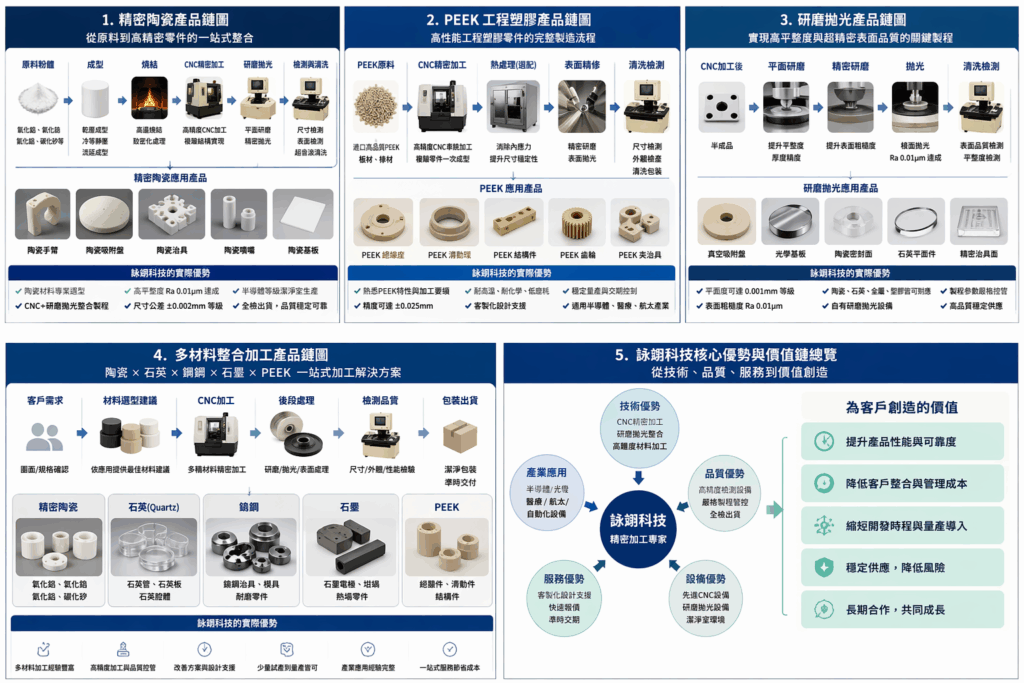
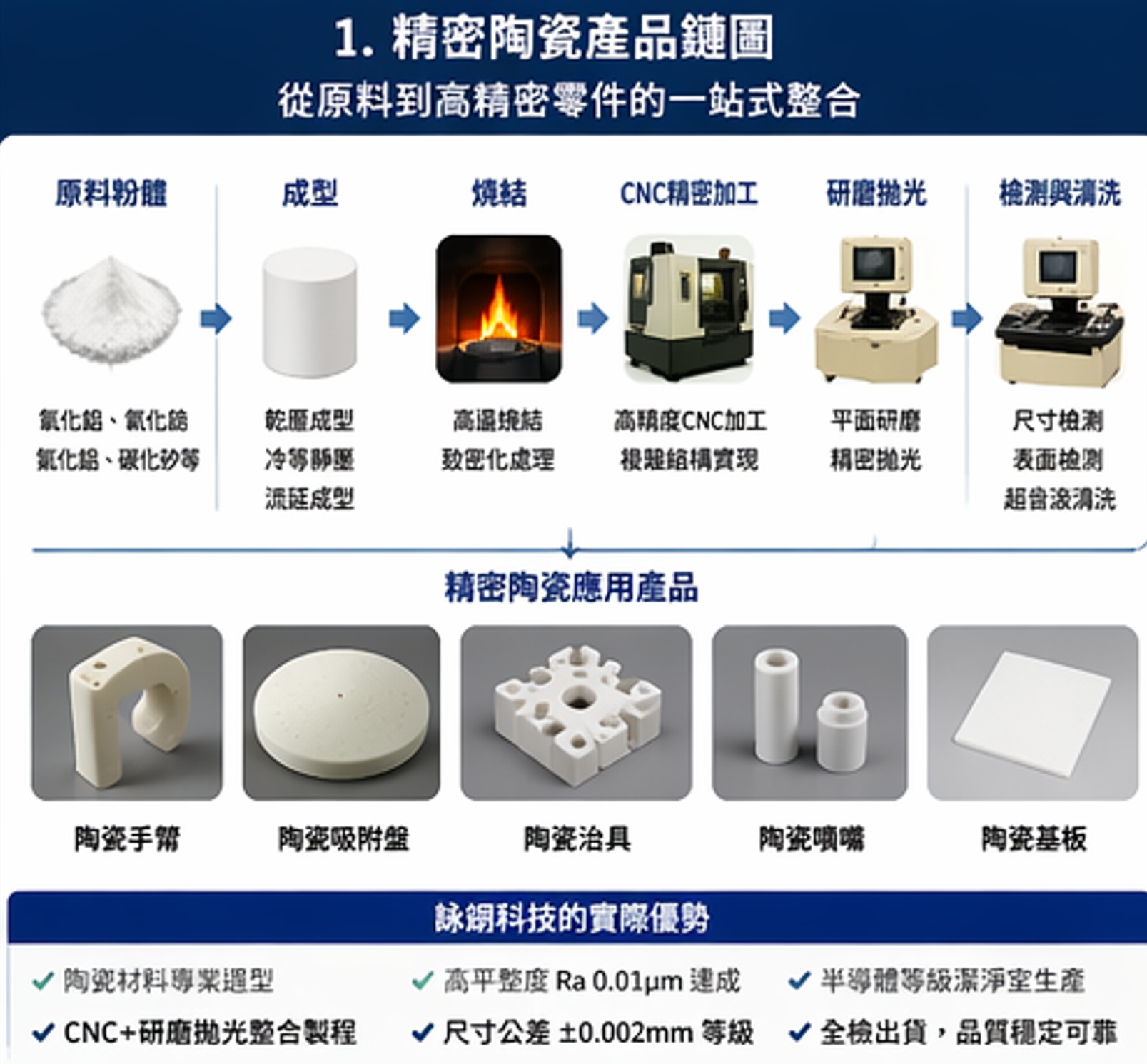
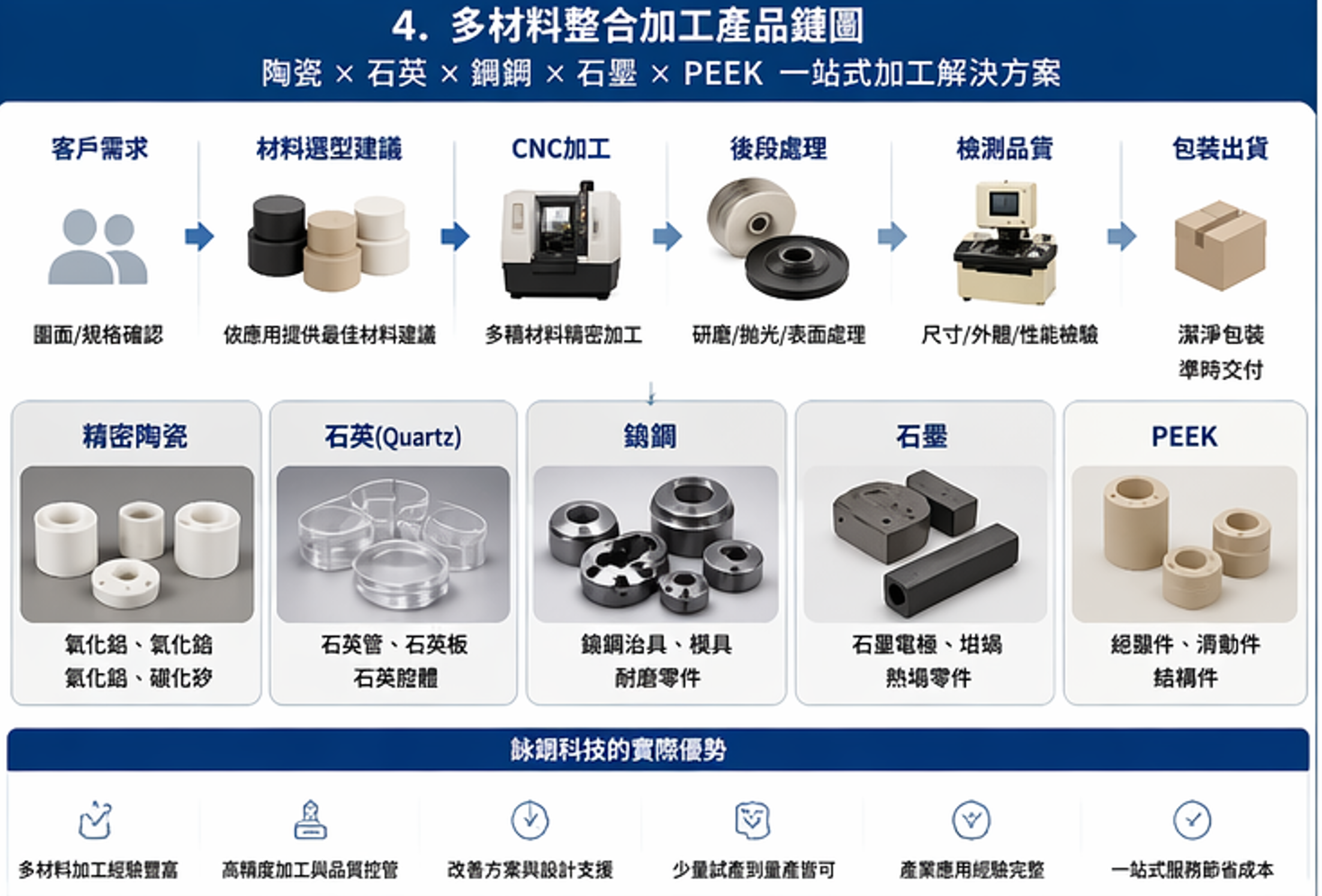
1. Precision Ceramic Components (Zirconia / Alumina, etc.)
Precision ceramics are widely used in CNC industries for high-cleanliness, wear-resistant, and low-contamination environments. Typical products include:
👉 Ceramic robotic arms, vacuum chucks, carrier bases, positioning fixtures, nozzles, and microfluidic components for semiconductor equipment
Manufacturing Characteristics:
Ceramic parts require “pre-sintering machining + post-sintering precision grinding and polishing” to achieve micron-level tolerances and mirror-grade surface finishes
👉 Yong Yi Technology Advantages:
Integrated capabilities in ceramics, CNC machining, and precision grinding/polishing enable a one-stop process from design → machining → inspection, ensuring tight tolerance control and batch consistency while reducing validation risks for semiconductor clients
2. Quartz Precision Machined Components
Quartz is an essential material in semiconductor and optoelectronics industries. Main products include:
👉 Quartz chambers, quartz windows, quartz carriers, and internal components for etching equipment
Processing Focus:
Due to its brittle nature, machining must carefully control cutting stress and tool paths to prevent micro-cracks and fractures
👉 Yong Yi Technology Advantages:
Expertise in both ceramic and quartz machining allows handling of brittle materials with high precision, ensuring optical clarity and dimensional stability for long-term semiconductor applications
3. Tungsten Carbide Precision Components
Tungsten carbide is an ultra-hard material widely used in CNC industries. Typical products include:
👉 Precision cutting tools, stamping molds, wear-resistant parts, guide bushings, and micro-hole components
Processing Characteristics:
Requires high-rigidity equipment and diamond tooling, combined with precision grinding to ensure accuracy and durability
👉 Yong Yi Technology Advantages:
Strong multi-material integration capability (ceramics / metals / hard materials), providing one-stop solutions from design to manufacturing, enhancing overall component reliability
4. Graphite Precision Machined Components
Graphite is commonly used in high-temperature and semiconductor processes. Products include:
👉 EDM electrodes, semiconductor thermal field components, crucibles, fixtures, and conductive structural parts
Processing Focus:
Dust control and edge integrity are critical to avoid chipping and ensure structural stability
👉 Yong Yi Technology Advantages:
Provides clean machining environments and precise process control, suitable for contamination-sensitive semiconductor industries, ensuring stable product quality
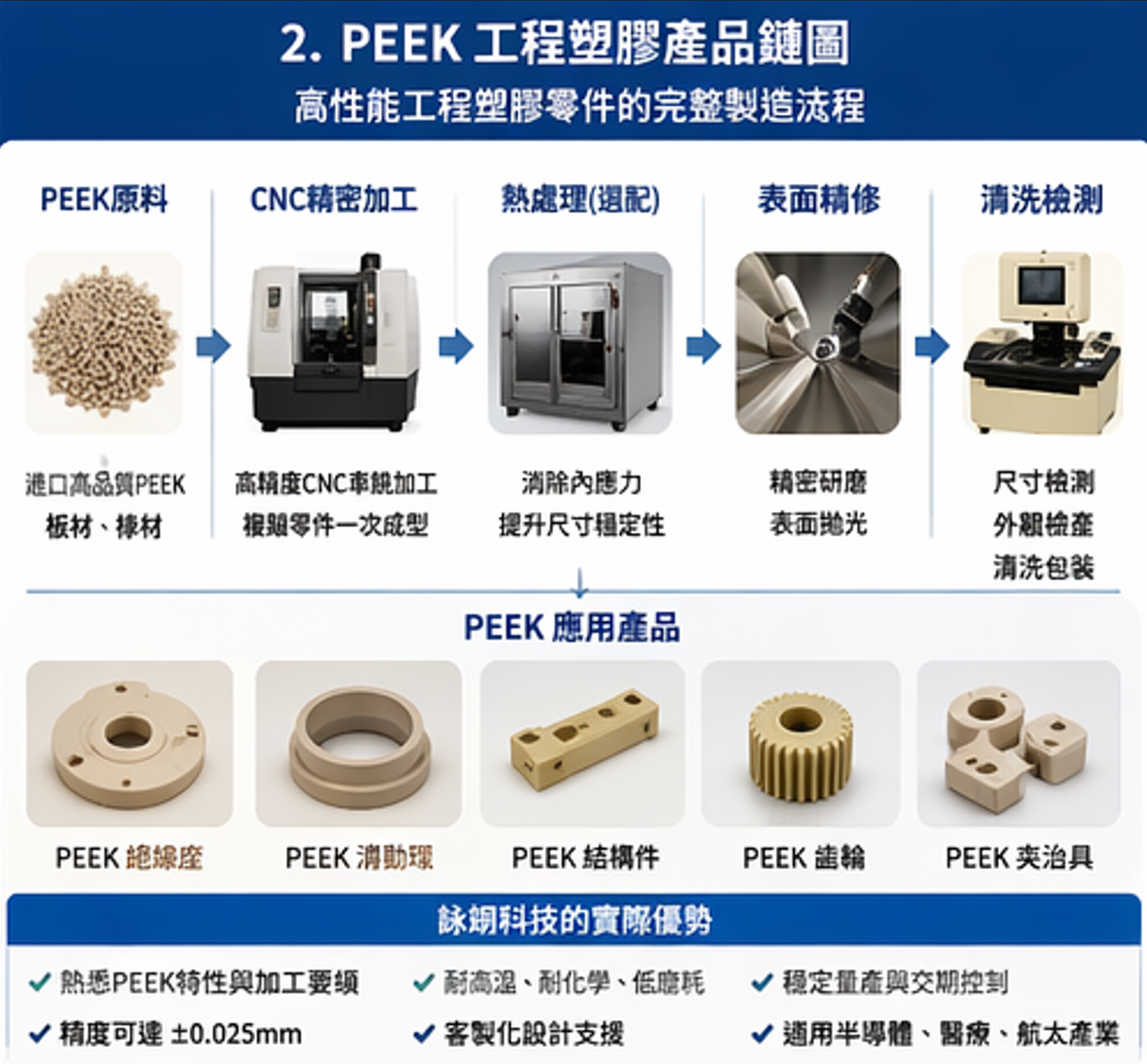
5. PEEK Engineering Plastics × CNC Machining
PEEK is a high-performance engineering plastic widely used in CNC industries. Products include:
👉 Insulation components, sliding parts, semiconductor structural components, and medical-grade parts
Machining Capability:
Achieves ±0.025 mm precision with excellent surface quality, along with high temperature and chemical resistance
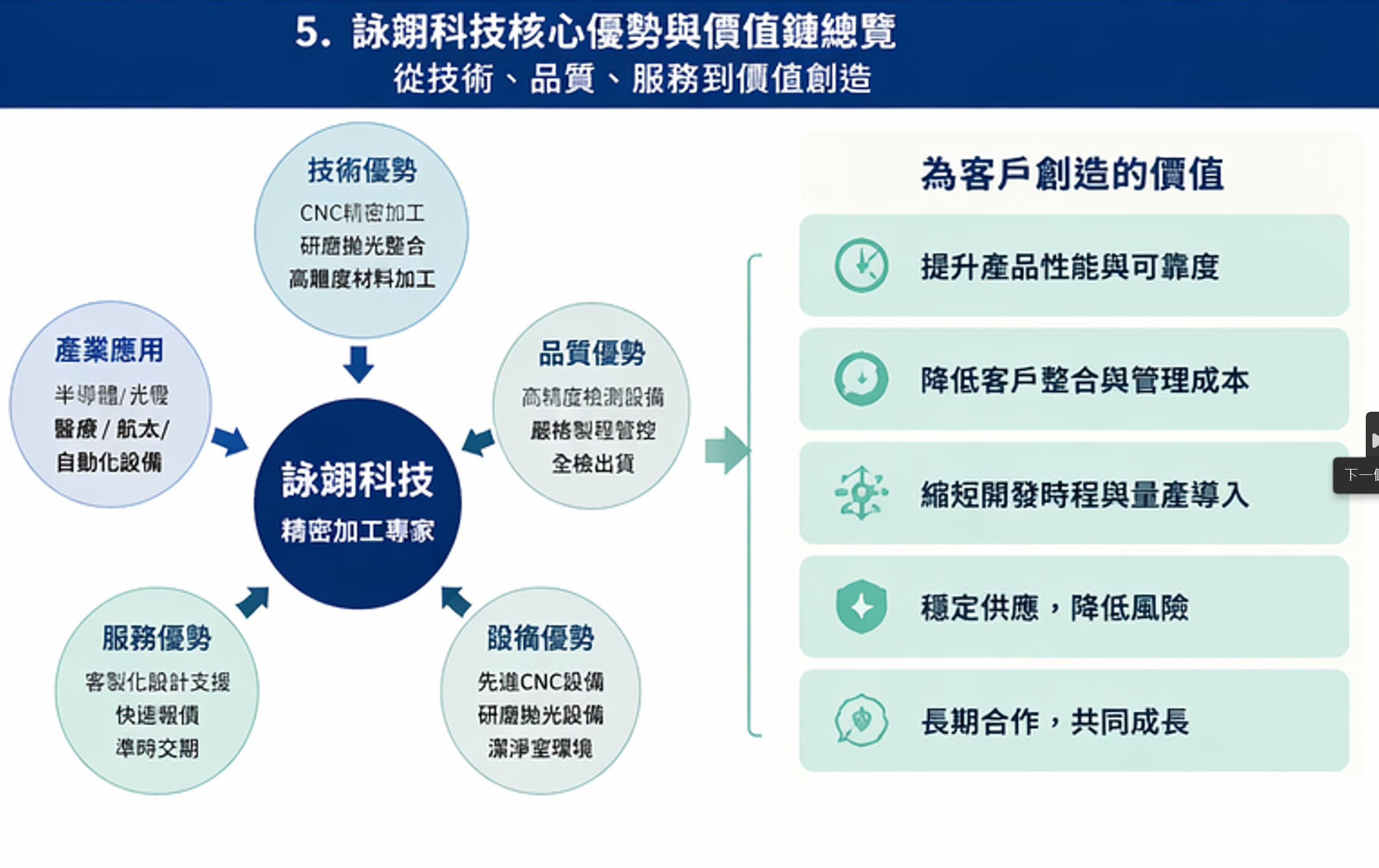
👉 Yong Yi Technology Advantages:
Deep understanding of PEEK material supply chain combined with CNC expertise enables full support from material selection and design optimization to mass production, ideal for high-end equipment applications
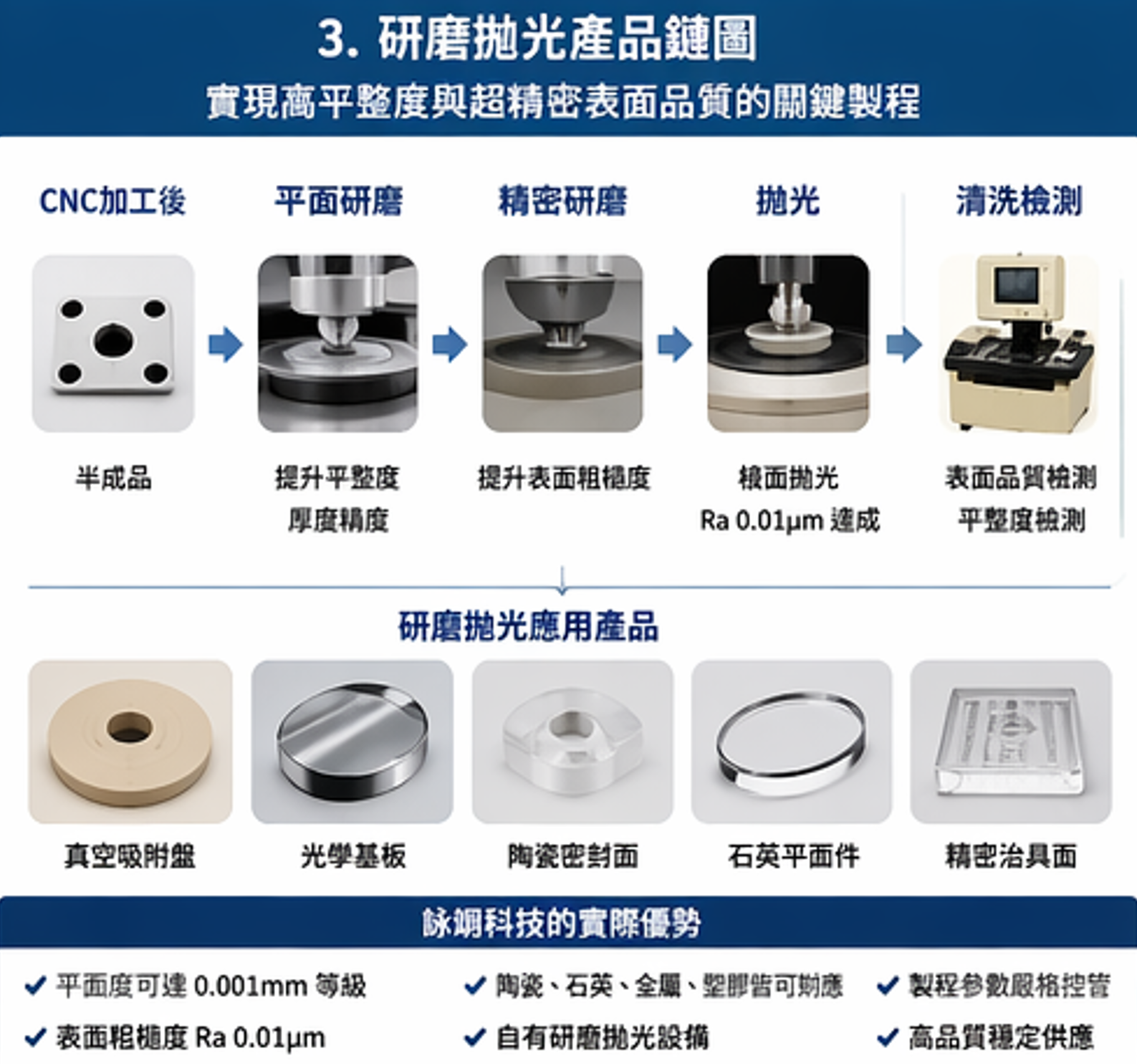
6. Ceramic Grinding & Polishing × Surface Grinding Technology
Key products include:
👉 High-precision flat substrates, sealing surfaces, vacuum adsorption surfaces, and optical contact surfaces
Technical Highlights:
👉 Surface roughness up to Ra 0.01 μm
👉 Tolerance control up to ±0.002 mm
👉 Yong Yi Technology Advantages:
Combines CNC rough machining with precision grinding and polishing to achieve superior flatness and consistency, ideal for semiconductor and optical industries
#Zirkonoxid ist ein hochfestes und zähes Präzisionskeramikmaterial, das häufig für verschleißfeste, korrosionsbeständige und biomedizinische Bauteile verwendet wird. Seine Bearbeitung erfordert präzises Schleifen und eine präzise Sinterkontrolle, um Maßgenauigkeit und Oberflächenqualität zu erzielen. #CNCMachining
#Quarz ist ein hochreines, hochtemperaturbeständiges Material mit hervorragenden elektrischen Isolationseigenschaften, das in Halbleiteranlagen und optischen Komponenten weit verbreitet ist. Bei seiner Bearbeitung liegt der Fokus auf der Vermeidung von Mikrorissen und der Aufrechterhaltung einer hohen Lichtdurchlässigkeit. #CNCMachining
#Wolframcarbid ist ein ultrahartes Material mit extrem hoher Verschleißfestigkeit und Druckfestigkeit, das häufig in der Werkzeug- und Formenbauindustrie eingesetzt wird. Seine Bearbeitung erfordert hochsteife Anlagen und Spezialwerkzeuge, um Präzision und Lebensdauer zu gewährleisten. #CNCMachining
#Graphit ist ein Material mit hoher Wärmeleitfähigkeit, hoher elektrischer Leitfähigkeit und hoher Temperaturbeständigkeit, das häufig in Elektroden und in den Heizzonen von Halbleitern verwendet wird. Seine Bearbeitung erfordert die Kontrolle von Staub und die Vermeidung von Kantenausbrüchen, um die strukturelle Integrität zu erhalten. #CNCMachining
#Technische Kunststoffe wie POM, PTFE und PEEK zeichnen sich durch hervorragende mechanische und chemische Stabilität aus und eignen sich daher für die Bearbeitung von Präzisionsbauteilen und Isolierteilen. #CNCMachining
#PEEK (Polyetheretherketon) ist ein Hochleistungskunststoff mit hoher Temperatur- und Chemikalienbeständigkeit sowie hoher Festigkeit. Er wird häufig in der Halbleiter- und Medizintechnik eingesetzt, und seine Verarbeitung erfordert eine präzise Kontrolle der thermischen Verformung und des Werkzeugverschleißes. #CNCMachining
#Oberflächenschleifen ist eine hochpräzise Oberflächenbearbeitungstechnologie, mit der eine Ebenheit im Mikrometerbereich und Maßgenauigkeit erzielt werden. Es wird häufig bei der Herstellung von Präzisionskeramik- und Metallteilen eingesetzt. #CNCMachining
#Keramikschleifen und -polieren ist ein wichtiger Prozess zur Verbesserung der Oberflächengüte und Präzision von Keramik, zur Reduzierung der Reibung und zur Verbesserung der Produktlebensdauer und -leistung. #CNCMachining
#Die Bearbeitung von Zirkonoxid ist eine hochkomplexe Keramikbearbeitungstechnologie, die eine Kombination aus Vorsintern und abschließender Nachbearbeitung erfordert, um Maßstabilität und mechanische Eigenschaften zu gewährleisten. #CNC-Bearbeitung
#Die Fertigung von Präzisionskeramikteilen umfasst Materialauswahl, Umformung, Sintern und Nachbearbeitung und findet breite Anwendung in der Halbleiter-, Luft- und Raumfahrt- sowie High-End-Geräteindustrie. #CNC-Bearbeitung

location_on 42756 No. 188-9, Section 1, Dafeng Road, Tanzi District, Taichung City, Taiwan
email yongyi-sales@umail.hinet.net
email justinwu6767@gmail.com